We must explain to you how all seds this mistakens idea off denouncing pleasures and praising pain was born and I will give you a completed accounts off the system and expound the actually teaching.

Preloader Close
Contact Info
-
Address
Romanian 9520 Faires Farm Road,
Carlsbad, NC 28213. -
Phone
-
Email
© Corvex 2021, All Rights Reserved.
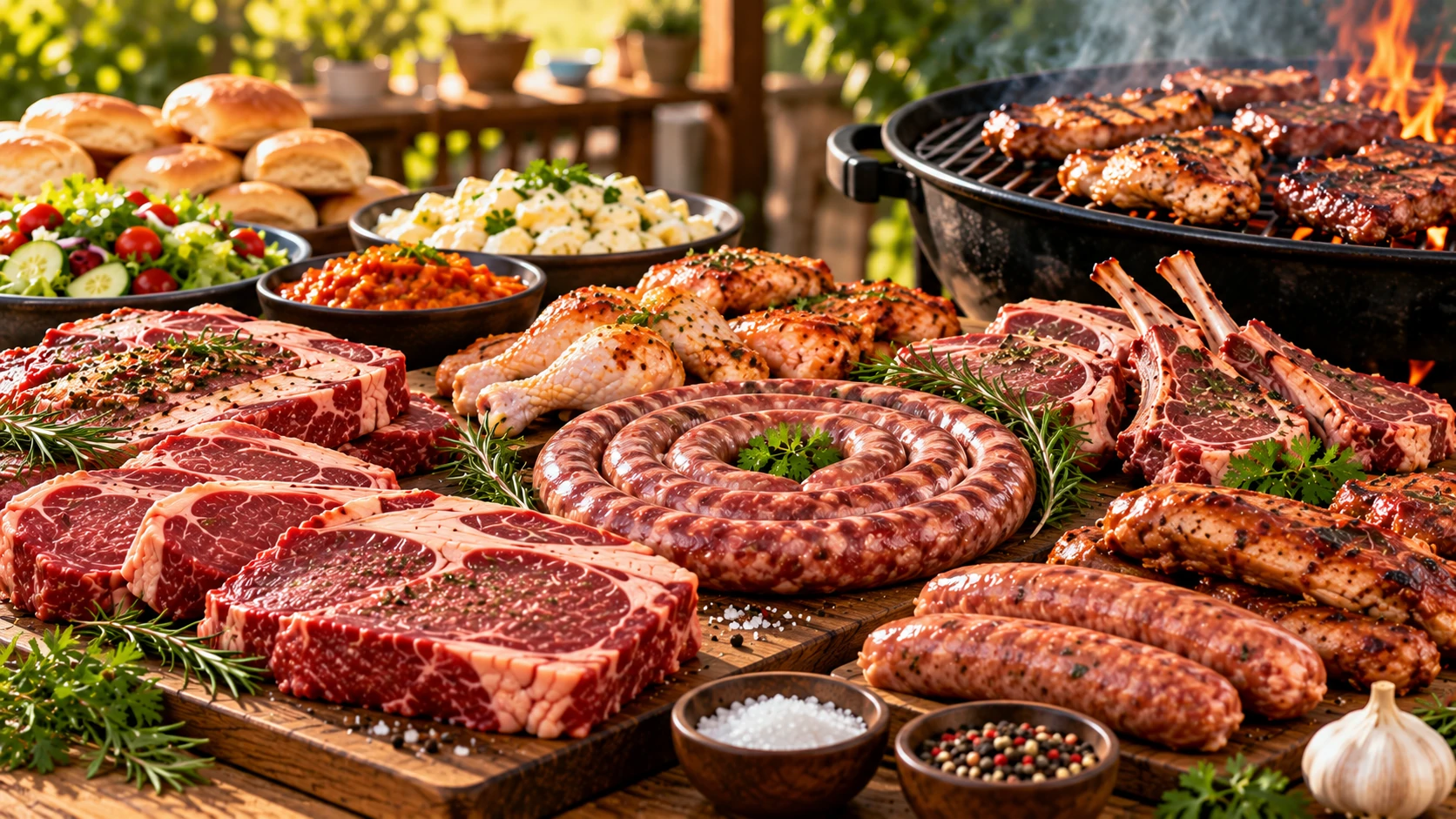
One of the most common questions when planning a braai is simple: how much meat do you need per person?
As a general starting point, plan for around 300g to 400g of meat per adult when serving a braai with side dishes. Children will usually need less, while you may want to allow a little more for guests with bigger appetites or when meat is the main focus of the meal.
The exact amount also depends on the type of meat you’re serving, whether the cuts contain bones and how many sides will be on the table.
This simple guide will help you calculate how much beef, chicken, pork, lamb and boerewors to buy for your next braai.
How Much Braai Meat Do You Need Per Person?
For a typical braai, these quantities provide a useful starting point:
| Guest | Approximate Meat Quantity |
|---|---|
| Child | 150g–200g |
| Adult | 300g–400g |
| Larger appetite | 400g–500g |
These quantities refer to the total amount of meat per person, not each individual type of meat.
For example, if you’re planning 350g per adult and serving boerewors, chicken and beef, you would divide that 350g between the three options.
You don’t need 350g of each.
Braai Meat Calculator
Using approximately 350g per adult, here’s a quick estimate:
| Number of People | Approximate Meat Needed |
|---|---|
| 5 | 1.75kg |
| 10 | 3.5kg |
| 15 | 5.25kg |
| 20 | 7kg |
| 30 | 10.5kg |
| 40 | 14kg |
| 50 | 17.5kg |
| 75 | 26.25kg |
| 100 | 35kg |
Think of these figures as a starting point rather than a strict rule.
If you’re serving many filling side dishes, you may be comfortable planning closer to 300g per adult. For a meat-heavy braai, you might move closer to 400g.
How Much Meat Do You Need for a Braai for 10 People?
For 10 adults, approximately 3–4kg of meat should provide a useful starting point.
You could divide it like this:
- 1kg boerewors
- 1kg chicken
- 1kg beef
- 500g–1kg lamb or pork
This gives your guests several choices without buying large quantities of every meat.
If some of the guests are children, you may need less.
How Much Meat Do You Need for 20 People?
For 20 adults, plan for approximately 6–8kg of meat.
An example combination could include:
- 2kg boerewors
- 2kg chicken
- 2kg beef
- 1–2kg pork or lamb
That gives you approximately 7–8kg in total.
You can change the proportions depending on what your guests prefer.
If you know boerewors and chicken are likely to be the most popular, for example, allocate more of your order to those products.
How Much Meat Do You Need for 50 People?
For 50 adults, approximately 15–20kg of meat is a practical starting range.
For example:
| Meat | Example Quantity |
|---|---|
| Boerewors | 5kg |
| Chicken | 5kg |
| Beef | 5kg |
| Pork or lamb | 2.5kg |
| Total | 17.5kg |
When you’re feeding this many people, consider more than just the quantity.
You’ll also need enough refrigeration, braai space and people available to prepare and cook the food.
How Much Meat Do You Need for 100 People?
For 100 adults, you’ll generally be looking at approximately 30–40kg of meat.
Using 350g per person gives you:
100 × 350g = 35kg of meat
You could divide that between several options:
- 10kg boerewors
- 10kg chicken
- 10kg beef
- 5kg pork or lamb
That’s only one example. Your final combination should reflect your guests, budget and menu.
For a braai this large, a bulk or custom meat order may be easier than purchasing many individual packs.
How Much Boerewors Do You Need Per Person?
If boerewors is one of several meats on the menu, you could plan for roughly 100g to 150g per adult as part of the person’s overall meat allowance.
You may want more if boerewors is the main meat you’re serving.
For example, if you have 20 people and are serving boerewors alongside chicken and beef, approximately 2kg of boerewors may form part of your overall 6–8kg meat order.
The important thing is to calculate your total meat requirement first before dividing it between different products.
How Much Chicken Do You Need for a Braai?
Chicken wings and drumsticks are useful when catering for a group because they’re easy to portion.
However, remember that these are bone-in cuts.
The weight on the package includes the bones, so 1kg of chicken drumsticks doesn’t provide the same amount of edible meat as 1kg of boneless chicken fillets.
If chicken makes up a significant part of your menu, allow for this when calculating quantities.
How Much Beef Do You Need?
Beef quantities depend heavily on the cut.
Steak portions can be relatively easy to calculate individually, while short ribs contain bone and therefore require a different approach.
Popular beef options for a braai include:
- Rump
- Sirloin
- Ribeye
- T-bone
- Short ribs
If you’re serving steak alongside boerewors and chicken, you don’t necessarily need one large steak for every guest.
Smaller portions can work when several meats are available.
What About Lamb and Pork?
Lamb and pork can add more variety to your braai without needing to make up the majority of your order.
Popular options include:
- Lamb chops
- Pork chops
- Pork sausages
If you’re already serving beef, chicken and boerewors, you could use lamb or pork as an additional option rather than allocating a full portion to every guest.
Bone-In vs Boneless Meat
This is one of the most important considerations when calculating meat quantities.
With boneless meat, most of the purchased weight is edible.
With bone-in meat, some of the weight comes from the bone.
Examples include:
- Chicken drumsticks
- Chicken wings
- Lamb chops
- T-bone steak
- Short ribs
- Some pork chops
If most of your braai menu consists of bone-in cuts, consider allowing a little more meat per person.
Do Side Dishes Affect How Much Meat You Need?
Yes.
The more substantial your sides, the less likely guests are to rely entirely on meat to fill their plates.
Traditional braai sides might include:
- Pap
- Chakalaka
- Potato salad
- Coleslaw
- Green salad
- Braaibroodjies
- Garlic bread
- Rolls
- Grilled vegetables
If you’re serving starters, several sides and dessert, approximately 300g per adult may be sufficient for many gatherings.
If you’re serving mainly meat with only one or two light sides, planning closer to 400g may be more appropriate.
How Much Meat Should You Plan for Children?
Children generally require smaller portions.
Approximately 150g to 200g per child can provide a useful planning estimate, depending on age and appetite.
You don’t necessarily need to calculate a young child as another full adult when determining your meat order.
For example, a braai with 15 adults and five young children will probably require less meat than a gathering of 20 adults.
Should You Buy Extra Meat?
It’s sensible to have a small buffer, particularly if you’re unsure about your final guest count.
However, you don’t need to dramatically over-order.
If your calculations suggest you need around 10kg, adding a modest amount for unexpected guests or larger appetites may be enough.
You can also choose meat that freezes well so any uncooked surplus can be stored appropriately rather than wasted.
A Simple Formula for Calculating Braai Meat
If you want a quick calculation, use:
Number of adults × 350g = approximate total meat required
For example:
30 adults × 350g = 10.5kg
Then add the meat required for children separately.
For example:
10 children × 175g = 1.75kg
Your approximate total would therefore be:
10.5kg + 1.75kg = 12.25kg
You can then divide that total between beef, chicken, pork, lamb and boerewors.
How to Split Your Braai Meat Order
Once you know the total quantity, decide how much variety you want.
For example, if you need 10kg of meat, you could order:
| Meat | Quantity |
|---|---|
| Boerewors | 3kg |
| Chicken | 3kg |
| Beef | 2.5kg |
| Lamb or pork | 1.5kg |
| Total | 10kg |
There is no perfect ratio.
If your family loves beef but rarely eats lamb, simply increase the beef and leave out the lamb.
Your order should reflect what your guests will actually eat.
Braai Meat Planning Checklist
Before buying your meat, confirm:
- Number of adults
- Number of children
- Approximate portion per person
- Total kilograms required
- Types of meat being served
- Bone-in vs boneless cuts
- Number of side dishes
- Dietary requirements
- Available refrigeration
- Braai size and cooking capacity
For larger gatherings, working through this list before ordering can save you a lot of guesswork.
Order Braai Meat in Pretoria and Johannesburg
Industrial Butcher supplies quality beef, chicken, pork, lamb and boerewors for family braais, parties and larger events across Pretoria and Johannesburg.
Choose individual meat products and meat combos, or speak to our team about a bulk or custom meat order based on your guest count, preferred cuts and quantities.
Whether you’re feeding 10 people around the braai or preparing for a much larger celebration, planning your meat quantities in advance can help you buy what you actually need.
Planning your next braai? Contact Industrial Butcher on 084 037 8238 to discuss your meat order.