We must explain to you how all seds this mistakens idea off denouncing pleasures and praising pain was born and I will give you a completed accounts off the system and expound the actually teaching.

Preloader Close
Contact Info
-
Address
Romanian 9520 Faires Farm Road,
Carlsbad, NC 28213. -
Phone
-
Email
© Corvex 2021, All Rights Reserved.
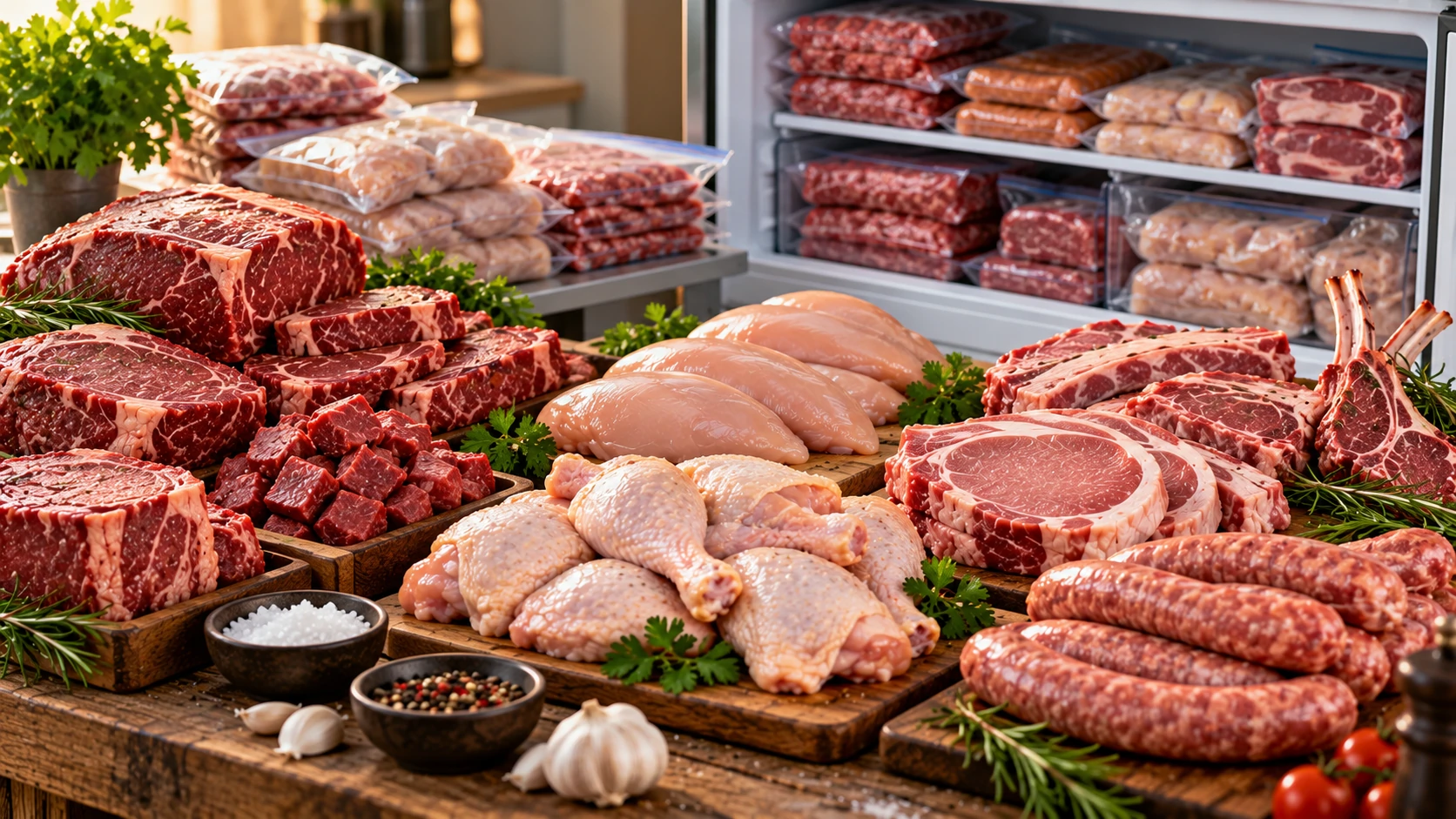
Buying meat in bulk can be a convenient way to stock your freezer, plan meals ahead and reduce how often you need to shop for meat. But is buying meat in bulk actually cheaper?
It can be, particularly when the price per kilogram is lower than buying the same products in smaller quantities. However, the real value depends on the cuts you buy, how much your household actually uses and whether you can store the meat correctly.
Before placing a large meat order, it’s worth looking beyond the total price and considering cost per kilogram, freezer space, portion sizes and food safety.
Here’s what you need to know.
Is It Cheaper to Buy Meat in Bulk?
Buying meat in bulk can reduce the cost per kilogram, but larger quantities aren’t automatically cheaper.
To determine whether you’re getting better value, compare the price per kilogram rather than simply looking at the total price.
For example, if the same beef cut is available in a small pack and a larger bulk pack, divide the total price by the weight of each option. This gives you a clearer comparison.
Bulk buying can offer additional practical benefits too. You may be able to:
- Make fewer trips to buy meat
- Plan several weeks of meals at once
- Keep frequently used cuts available
- Buy meat for a large family or shared household
- Prepare for braais and events in advance
- Divide larger quantities into convenient portions
However, buying more than you can realistically use or store can eliminate those benefits.
What Meat Is Good to Buy in Bulk?
The best products to buy in larger quantities are generally the ones your household regularly eats.
Beef
Beef gives you plenty of options for bulk buying.
Depending on your family’s meals, you could stock up on:
- Beef mince
- Chuck
- Brisket
- Short ribs
- Steak
- Beef bones
- Boerewors
Mince is particularly versatile because it can be used for burgers, meatballs, pasta dishes and cottage pie, while chuck and brisket are useful for stews and slow-cooked meals.
Chicken
Chicken is another practical option because different portions work across many meals.
Consider:
- Chicken fillets
- Drumsticks
- Thighs
- Wings
Buying several different chicken cuts gives you options for curries, braais, roasting, grilling and quick weekday meals.
Pork
Pork can add variety to a bulk meat order.
Depending on what’s available, you might choose pork chops, sausages or larger cuts for roasting and other meals.
Lamb
If your household regularly eats lamb, adding selected lamb cuts to your bulk order can give you options for braais, curries, stews and roasts.
Boerewors
Boerewors is useful to keep in the freezer for weekend braais and everyday meals.
Rather than freezing one large quantity together, divide it into portions suitable for a single meal before freezing.
Should You Buy One Meat or a Mixed Selection?
For most households, a mixed bulk meat order can be more practical than buying a large quantity of one product.
For example, instead of filling your freezer entirely with chicken, you could divide your order between:
| Meat | Useful For |
|---|---|
| Beef mince | Pasta, burgers, meatballs |
| Beef chuck | Stews and slow cooking |
| Chicken fillets | Quick weekday meals |
| Chicken portions | Roasting, curries, braais |
| Boerewors | Braais and easy dinners |
| Pork | Braais and family meals |
| Lamb | Curries, roasts and braais |
This gives you more flexibility when planning meals throughout the month.
How Much Bulk Meat Should You Buy?
The right quantity depends on your household rather than a fixed number of kilograms.
Before ordering, consider:
Household size: How many people are you regularly feeding?
Meat consumption: How many meals each week include meat?
Freezer capacity: Can you safely store everything you’re buying?
Meal preferences: Which products does your household actually eat?
Shopping frequency: Are you buying for one week, two weeks or an entire month?
Events: Are any braais, parties or family gatherings coming up?
Buying 20kg because it appears to offer good value doesn’t help if you only have space to store 10kg properly.
How to Store Bulk Meat Properly
Proper storage is particularly important when buying meat in larger quantities.
If you aren’t planning to cook the meat soon, freezing it promptly can help preserve its quality.
1. Portion the Meat Before Freezing
Avoid freezing several meals’ worth of meat together if you won’t use it all at once.
Divide your order into practical portions based on your household.
For example, if your family normally uses 500g of mince for dinner, divide a larger mince order into approximately 500g portions before freezing.
This means you only need to defrost what you’re going to use.
2. Package Meat Properly
Meat should be securely packaged before freezing.
Suitable packaging helps protect it from exposure to air and reduces the risk of freezer burn.
If you’re repackaging products yourself, use appropriate freezer bags or freezer-safe containers and remove as much excess air as reasonably possible.
3. Label Your Meat
Once several packages are frozen, different cuts can become surprisingly difficult to identify.
Label each package with:
- Type of meat
- Cut
- Quantity or portion size
- Date frozen
This makes meal planning easier and helps you keep track of what has been in your freezer longest.
Organise Your Freezer
Don’t simply put your newest meat in front of everything else.
Organise your freezer so older products are easier to access and use first.
You could create separate areas for:
- Beef
- Chicken
- Pork
- Lamb
- Boerewors
- Prepared meals
A simple system can prevent forgotten packages from sitting at the bottom of the freezer.
How Long Can You Keep Meat in the Freezer?
Freezing keeps food safe for extended periods when it remains continuously frozen at an appropriate temperature, but quality can decline over time.
Recommended storage periods vary according to the type and cut of meat, packaging and freezer conditions.
Rather than treating every product the same, follow the storage guidance provided with the product and applicable food-safety recommendations.
Labelling packages with the freezing date makes it much easier to rotate your stock and use older products first.
What’s the Best Way to Defrost Frozen Meat?
Plan ahead and defrost meat safely.
One of the safest approaches is to transfer the portion you need from the freezer to the refrigerator and allow it to thaw under refrigeration.
Avoid leaving raw meat sitting at room temperature for extended periods.
Depending on the product, other safe defrosting methods may also be appropriate, but always follow suitable food-safety practices.
Once meat has been defrosted, handle and cook it appropriately.
Avoid Repeatedly Defrosting Your Bulk Order
This is another reason portioning before freezing is important.
If you freeze 5kg of meat together but only need 1kg, you’ll have to deal with far more meat than necessary when preparing one meal.
Separating the meat into household-sized portions before freezing allows you to remove exactly what you need.
It’s one of the simplest ways to make a bulk order more practical.
How to Know Whether Bulk Buying Is Worth It
Before purchasing, ask yourself four questions:
- Is the price per kilogram better?
- Will my household actually use all of this meat?
- Do I have enough freezer space?
- Can I portion and store it properly?
If the answer to all four is yes, buying meat in bulk may make sense for your household.
If you’re buying large quantities only because the overall deal looks attractive, calculate the actual cost and consider whether you’ll realistically use everything.
Bulk Meat for Parties and Events
Bulk purchasing isn’t only useful for stocking a household freezer.
It can also make sense when you’re preparing for:
- Braais
- Birthday parties
- Weddings
- Family gatherings
- Corporate functions
- Community events
- Catering
- Restaurant requirements
For larger events, calculate your guest count and approximate meat requirements before placing the order.
This helps you choose appropriate quantities rather than guessing.
Bulk Meat for Restaurants and Caterers
Restaurants, catering businesses and other food businesses may have very different requirements from households.
Consistency, quantity and the availability of particular cuts can become more important when you’re buying meat for commercial use.
When requesting a bulk order, provide as much information as possible about the meat type, cut, quantity and intended requirements.
This makes it easier for the butcher to understand exactly what you need.
Bulk Meat vs Meat Hampers: What’s the Difference?
The terms can sometimes overlap, but they’re useful for different needs.
A meat hamper or combo generally includes a predetermined selection of products and quantities.
A bulk meat order focuses more on purchasing larger quantities of specific products.
A custom meat order gives you more control over the combination of meat types, cuts and quantities.
For example, if you want a ready-made selection for your freezer, a meat combo may be convenient. If you need 10kg of a particular cut for an event, a bulk order may make more sense.
If you want to choose everything yourself, consider a custom order.
Tips for Buying Meat in Bulk
Before placing your next bulk order:
- Check your freezer space
- Plan several meals in advance
- Choose cuts your household regularly uses
- Compare prices per kilogram
- Decide how you’ll portion the meat
- Have freezer-safe packaging available if needed
- Label and date your portions
- Use older freezer stock first
- Order according to your actual needs rather than quantity alone
A little preparation can make buying meat in bulk much more convenient.
Order Bulk Meat in Pretoria and Johannesburg
Industrial Butcher supplies quality beef, chicken, pork, lamb and boerewors for households, restaurants, caterers, businesses and events in Pretoria and Johannesburg.
You can choose from available meat products and combos or speak to our team about a bulk or custom meat order based on the cuts and quantities you need.
Whether you’re stocking your family freezer, preparing for a large braai or ordering meat for your business, we’ll help you put together an order that suits your requirements.
Contact Industrial Butcher on 084 037 8238 to discuss your bulk meat order.